Ryan Barber Ryan Barber

Lukas Electric’s Guide to GFCI and AFCI: Why Your Outlets “Pop”

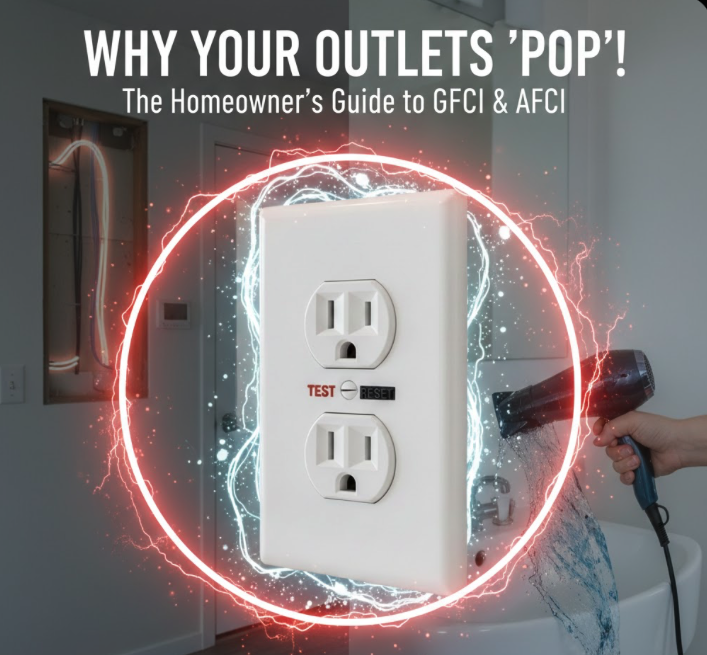
An educational graphic titled 'Why Your Outlets Pop!', featuring a white GFCI outlet on a bathroom wall. A glowing blue and orange ring surrounds the outlet to symbolize electrical protection, with a conceptual hair dryer and water droplets nearby to illustrate safety against shocks and fire.
We’ve all been there: you’re using a hair dryer or a toaster when—click—the power goes out. You look at the outlet and see a little button popped out, or you have to head to the garage to flip a switch in the breaker panel.

Those "clicks" are actually the sound of life-saving technology at work. In the electrical world, we call these GFCI and AFCI devices. While they might seem like a nuisance when they trip, they are the two most important safety features in your modern home.

GFCI: The “Water Safety” Device

GFCI stands for Ground Fault Circuit Interrupter.

  • The Goal: To protect people from electric shock.

  • How it works: It acts like a super-fast scale. It measures the electricity going out of the outlet and the electricity coming back. If there is a tiny discrepancy (meaning electricity is "leaking" out—perhaps through water or a person), it cuts the power in a fraction of a second.

  • Where to find them: Anywhere water is nearby—bathrooms, kitchens, laundry rooms, garages, and outdoor outlets.

Caption: A standard GFCI outlet found in kitchens and bathrooms.

AFCI: The “Fire Prevention” Device

AFCI stands for Arc Fault Circuit Interrupter.

  • The Goal: To protect your home from electrical fires.

  • How it works: It listens for the "sound" of electricity. Specifically, it looks for an "arc"—an accidental spark that happens when electricity jumps across a gap. This usually happens because of a loose wire, a frayed cord, or a nail accidentally driven through a wire in the wall. These arcs get hot enough to start a fire inside your walls before a standard breaker would even notice.

  • Where to find them: In newer homes, these are required in almost every living area, including bedrooms and dens.

Outlet vs. Breaker: What’s the Difference?

You might notice these safety features in two different forms. Both provide the same protection, but they live in different places:

Feature

  • The Outlet Version

  • The Breaker Version

How it looks

  • An outlet with "Test" and "Reset" buttons.

  • A switch in your main panel with a small "Test" button.

Visibility

  • Easy to see and reset right in the room.

  • Hidden in your electrical panel.

Scope

  • Usually protects just that outlet and the ones "downstream."

  • Protects the entire circuit, including all the wiring in the walls.

Why Did Mine Trip?

If your GFCI or AFCI keeps tripping, it’s usually for one of three reasons:

  1. A Faulty Appliance: Your toaster or hair dryer might have an internal "leak" or spark.

  2. Environmental Issues: Moisture or dust has made its way into an outdoor outlet.

  3. A Tired Device: Like any piece of technology, these devices eventually wear out. A GFCI typically lasts about 10 to 15 years before it needs replacement.

Your Safety Comes First

Electrical codes are updated every three years, and almost every update focuses on making these devices more effective. If you live in an older home, you may not have this protection yet. Upgrading your outlets or breakers is one of the most cost-effective ways to modernize your home and protect your family.


Is an outlet giving you trouble? If a device won’t reset or keeps tripping, it’s best to have a professional take a look. We can help identify if it’s a simple fix or a sign of a larger wiring issue.

Have questions about your home's safety? Contact Lukas Electric for a consultation.

  • Contact@lukaselectric.com

  • 970-638-8586

Read More
Lukas Gordon Lukas Gordon

Should I Get My EV Charger Install Inspected?

Why You Should Get an Electrical Inspection for Your EV Charger

As electric vehicles (EVs) become more popular, installing an EV charger at home or in a commercial setting is a smart and convenient choice. However, ensuring that your EV charger is properly installed and safe to use is crucial. This is where an electrical inspection comes in. Here are the top reasons why you should get an electrical inspection for your EV charger.

1. Ensures Safety and Prevents Fire Hazards

EV chargers handle high-voltage electricity, and improper installation can lead to electrical faults, overheating, or even fires. An inspection ensures that all wiring, circuit breakers, and grounding are correctly installed, minimizing the risk of electrical hazards.

2. Verifies Proper Installation and Code Compliance

Electrical codes and standards regulate the safe installation of EV chargers. An inspection ensures compliance with the National Electrical Code (NEC) and local regulations, helping to avoid fines or required modifications later.

3. Protects Your Electrical System

A poorly installed EV charger can overload your home’s electrical system, leading to power outages, circuit breaker trips, or damage to other appliances. An inspection confirms that your electrical panel can handle the additional load and that the charger is wired correctly.

4. Prevents Expensive Repairs

Identifying and fixing potential issues early on can save you from costly repairs down the line. Faulty wiring or improper grounding can damage your EV charger or even your vehicle’s battery, leading to expensive replacements.

5. Maintains Manufacturer Warranty

Some EV charger manufacturers require professional installation and inspection to keep the warranty valid. Failing to get an inspection could void the warranty, leaving you responsible for any future repairs or replacements.

6. Ensures Proper Grounding and Surge Protection

An electrical inspection verifies that your EV charger is properly grounded and protected against power surges. This is crucial in preventing damage from lightning strikes or fluctuations in the electrical grid.

7. Increases Home Value and Resale Potential

If you plan to sell your home, a properly installed and inspected EV charger can be an attractive feature for potential buyers. It adds value to your property and provides assurance that the electrical system is safe and up to code.

8. Provides Peace of Mind

Knowing that your EV charger is installed correctly and safely gives you confidence every time you plug in your vehicle. You won’t have to worry about potential hazards or unexpected malfunctions.

Conclusion

Getting an electrical inspection for your EV charger is a small investment that ensures safety, compliance, and long-term reliability. Whether you're installing a new charger or upgrading an existing one, an inspection is essential to protect your home, vehicle, and electrical system. Always hire a licensed electrician to perform the installation and schedule a professional inspection to verify that everything is up to standard.

Would you like to add any specific details, such as cost estimates or common issues found during inspections?.

Read More
Lukas Gordon Lukas Gordon

Dangers Of Space Heaters

It all begins with an idea.

The Hidden Dangers of Space Heaters: What You Need to Know

As temperatures drop, many people turn to space heaters for warmth. These portable devices offer quick and convenient heating, making them a popular choice for homes, offices, and even garages. However, despite their benefits, space heaters come with significant risks that can lead to dangerous and even deadly consequences if not used properly.

Fire Hazards

One of the most alarming dangers of space heaters is their potential to cause fires. According to the National Fire Protection Association (NFPA), space heaters are responsible for a large percentage of home heating fires. These fires often result from:

  • Overheating: Some space heaters do not have automatic shut-off features, allowing them to overheat and ignite nearby objects.

  • Flammable Materials: Placing a space heater too close to curtains, furniture, blankets, or other flammable items can easily spark a fire.

  • Tipping Over: If knocked over, especially by children or pets, a space heater can come into contact with rugs or other materials, leading to combustion.

Carbon Monoxide Poisoning

For space heaters that rely on fuel, such as kerosene or propane models, carbon monoxide (CO) poisoning is a serious concern. CO is a colorless, odorless gas that can be deadly in high concentrations. Improper ventilation or malfunctioning units can lead to dangerous CO buildup, causing symptoms like dizziness, nausea, confusion, and, in severe cases, death.

Electrical Risks

Electric space heaters can also pose electrical dangers, including:

  • Overloaded Circuits: Plugging a high-wattage space heater into a power strip or an overloaded outlet can cause electrical fires.

  • Damaged Cords: Frayed or damaged power cords can lead to electrical shocks or fires.

  • Poor Wiring: Cheap or defective space heaters may have faulty wiring that increases the risk of fire hazards.

Preventing Space Heater Accidents

While space heaters can be dangerous, they can still be used safely with the right precautions. Here are some essential safety tips:

  1. Choose a heater with safety features – Look for models with automatic shut-off capabilities if tipped over or overheated.

  2. Keep a safe distance – Always place space heaters at least three feet away from flammable materials.

  3. Never leave them unattended – Turn off space heaters when leaving a room or going to bed.

  4. Use proper outlets – Plug space heaters directly into wall outlets, avoiding extension cords or power strips.

  5. Ensure proper ventilation – For fuel-based heaters, maintain good airflow and use carbon monoxide detectors.

  6. Check for recalls – Before purchasing, research whether the model has any safety concerns or recalls.

Conclusion

Space heaters provide comfort in colder months, but their risks should not be ignored. Understanding the dangers and following safety guidelines can prevent accidents and save lives. If you must use a space heater, always prioritize safety to keep your home and loved ones warm—without the risk.

Read More