Solar vs. Gas Generators: A Denver Homeowner's Guide to Backup Power
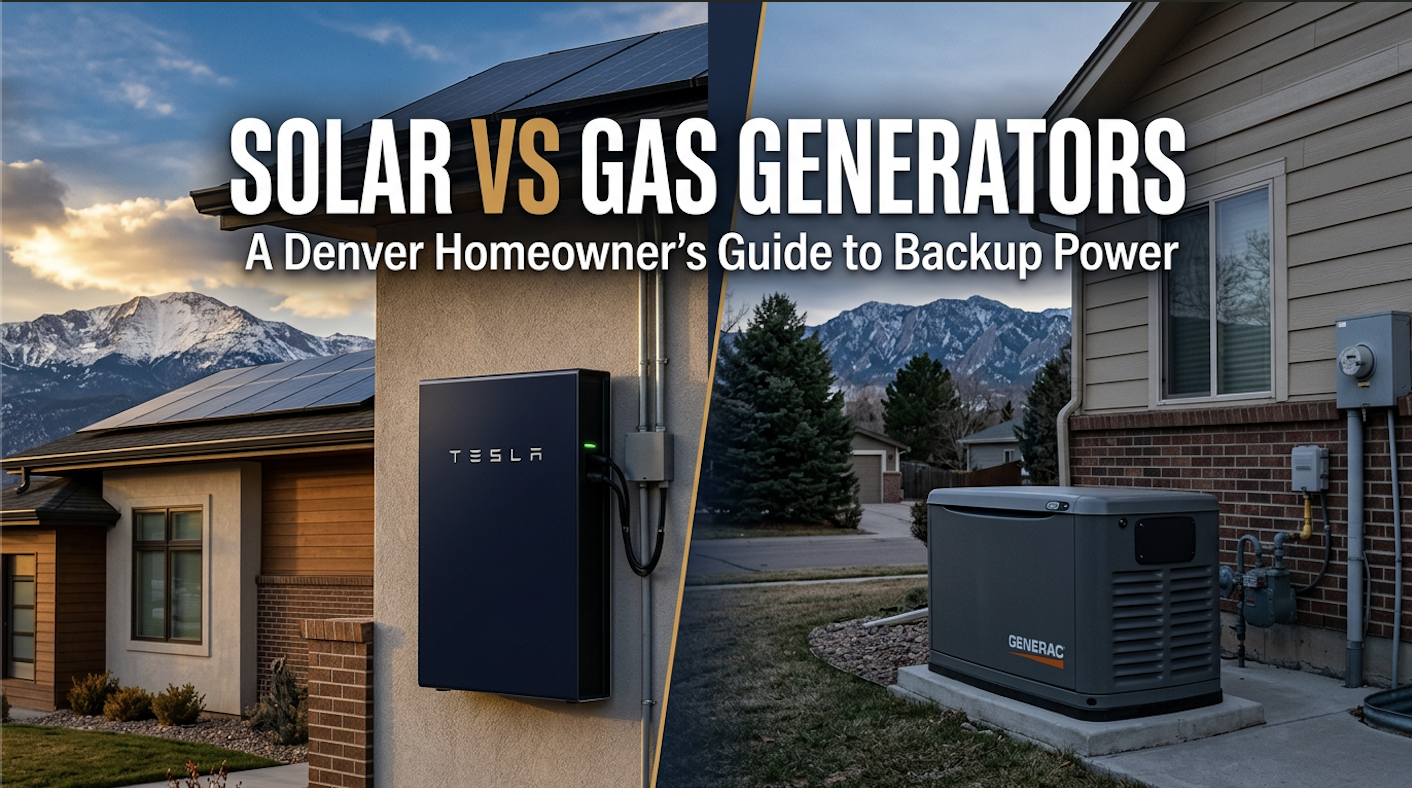
When the power goes out in the Denver Metro — whether from a summer storm rolling off the Front Range, a winter wind event, or a planned utility shutoff — your generator decision suddenly matters a lot.
The food in your fridge, your furnace, your medical equipment, your home office: all of it depends on what you installed (or didn't) before the lights went dark.
At Lukas Electric, we install both solar and gas backup systems for homeowners across the Denver area, from compact battery units to whole-home standby setups. Here's an honest breakdown of how the two compare, what each really costs, and how to figure out which one fits your home.
The Case for Solar Generators
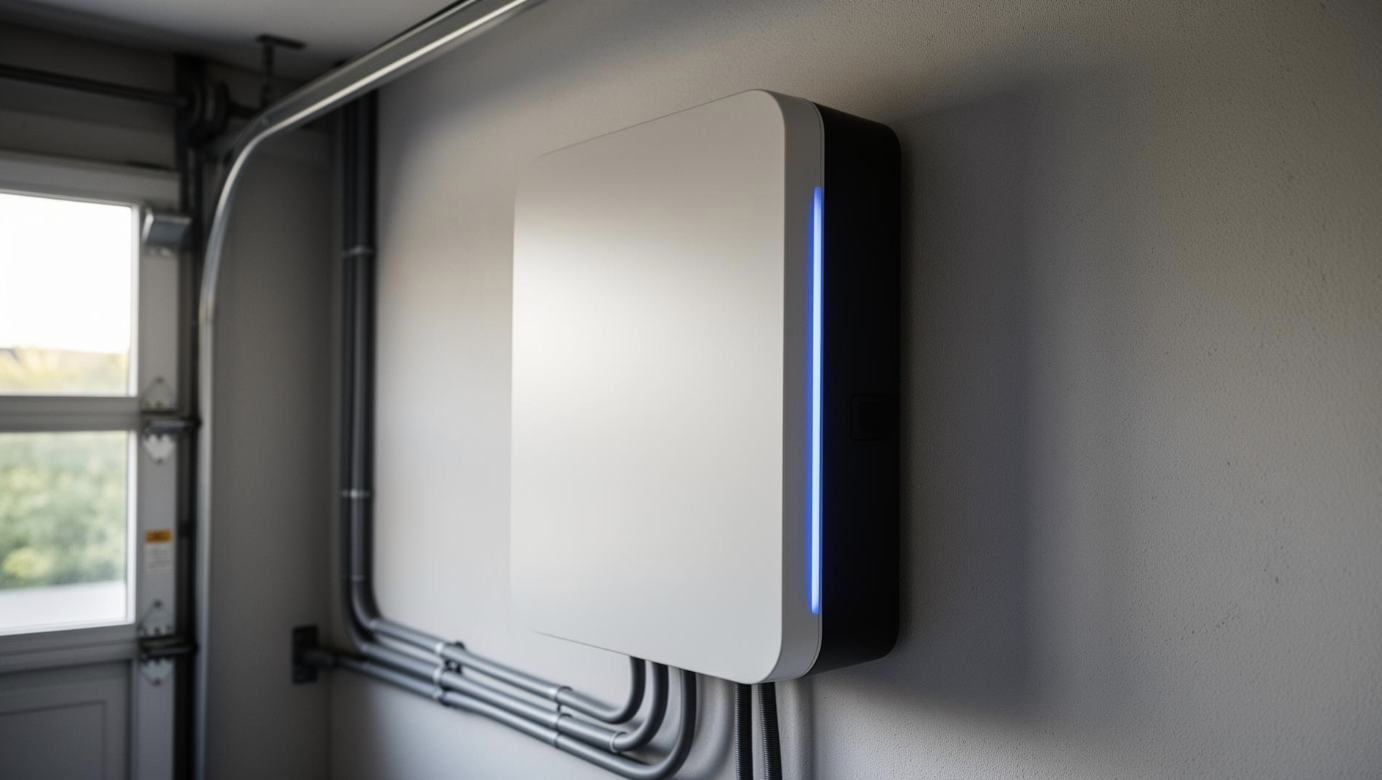
A modern wall-mounted home battery — the heart of a solar backup system.
A solar generator is, at its core, a battery. Some are portable units the size of a carry-on suitcase. Others are wall-mounted home batteries — Tesla Powerwall, Enphase IQ, FranklinWH — paired with rooftop panels and a smart inverter that converts DC battery power into the AC power your home actually uses.
The advantages are real:
No fuel, no fumes. You're not stockpiling gasoline, hauling propane tanks, or hooking into a natural gas line. That matters during fuel shortages and for anyone who doesn't want a combustion engine running next to the house.
It pays you back when the grid is up. Solar batteries store cheap daytime power and discharge it during peak evening rates. That offsets your bill every single day, not just during outages.
Silent operation. No engine noise at 2 a.m. Your neighbors will thank you.
Minimal maintenance. No oil changes, no spark plugs, no carburetor problems after sitting for a year.
The honest tradeoffs:
Capacity is finite. A standard home battery holds roughly 10–13 kWh. That can run essentials — fridge, lights, internet, a few outlets — for a day or so. Running central AC, an electric range, and a hot tub simultaneously? You'll need multiple batteries, and that gets expensive fast.
The full setup is a significant investment. A whole-home solar-plus-storage system in the Denver area typically lands somewhere between $25,000 and $60,000+ depending on panel count, battery stack size, and electrical work needed. Federal and state incentives soften the blow, but it's still a serious capital decision.
Cold weather affects performance. Lithium batteries lose some capacity below freezing. Quality systems compensate with thermal management, but it's worth knowing.
The Smart Entry Point: A 1,800-Watt Solar Generator
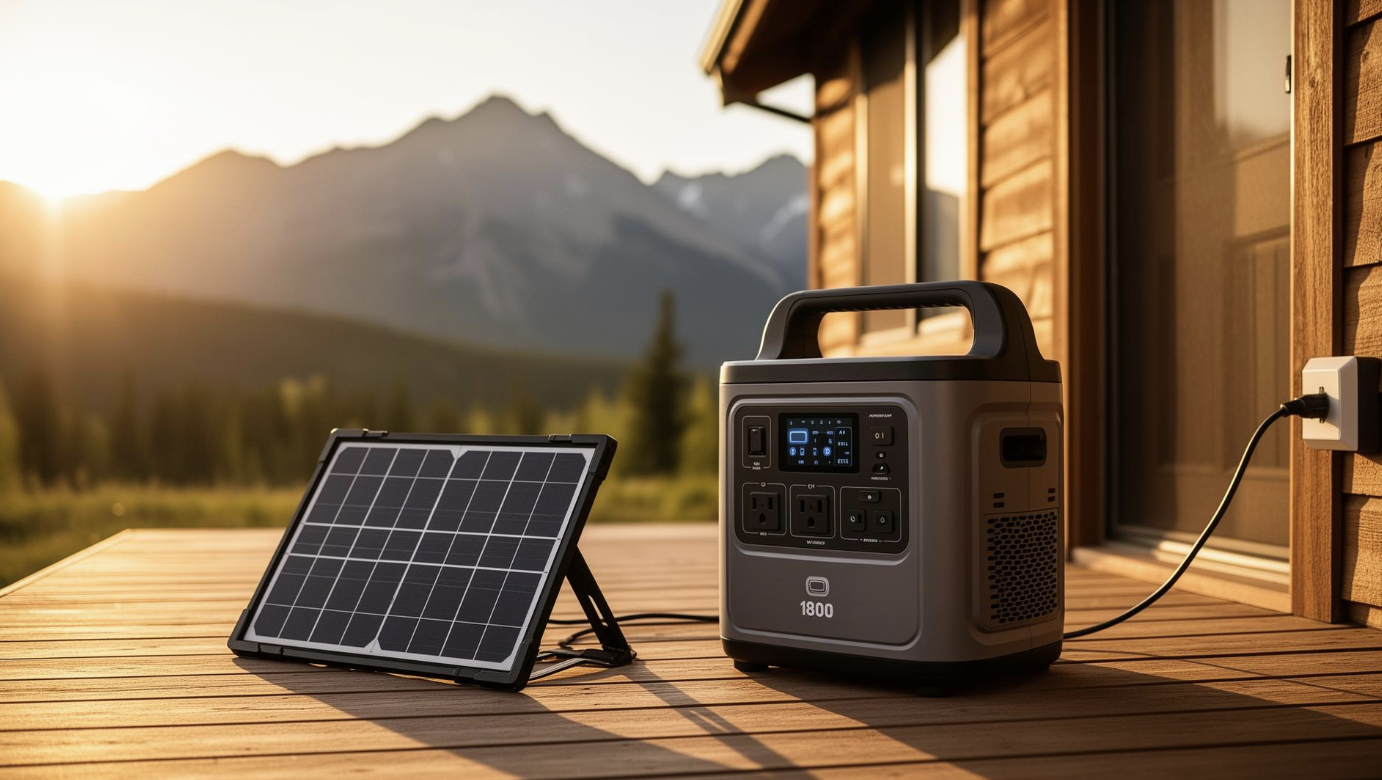
A portable 1,800W unit — the most practical sub-$2,000 resilience upgrade we install.
Not ready for a $40,000 whole-home system? You don't have to be. A portable 1,800-watt solar generator — units from EcoFlow, Bluetti, Jackery, and Goal Zero in this range — is one of the most practical purchases a homeowner can make for under $2,000.
Here's what an 1,800W unit with a built-in DC-to-AC inverter actually does for you:
Saves the contents of your fridge and freezer during a multi-day outage. A modern fridge pulls roughly 100–200 watts when running, and these units can keep one alive for 24–48 hours on a charge.
Stores cheap daytime power for nighttime use. Charge it from a wall outlet during off-peak hours (or from a small panel kit) and run essentials off it after dark.
Powers a CPAP, a router, phones, lights, and a small space heater through the night.
Doubles as camping and jobsite power. It's not a system you have to commit to forever — it goes where you need it.
Where an electrician comes in: if you want that portable unit to do more than power a few extension cords, we can install a manual transfer switch or an inlet box so you can safely back-feed selected circuits in your home. That's the difference between running a single appliance and keeping your fridge, furnace blower, and a couple of outlets alive automatically. Don't ever back-feed a generator into a regular outlet — it's dangerous to you and to line workers.
FROM THE FIELD
A Recent Install by Our Team
One of our electricians just wired up this connection in the Denver Metro. Quick look at the work in action.
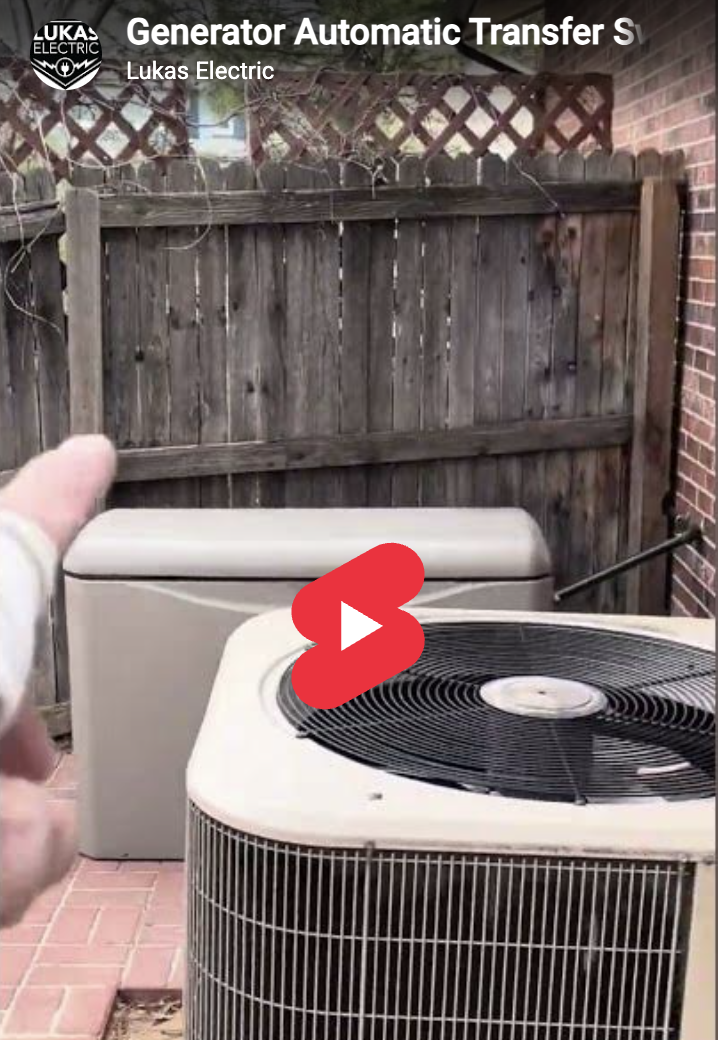
Kohler Gas generator installed with an automatic transfer switch. Runs on both Natural Gas and Gasoline.
The Case for Gas Generators
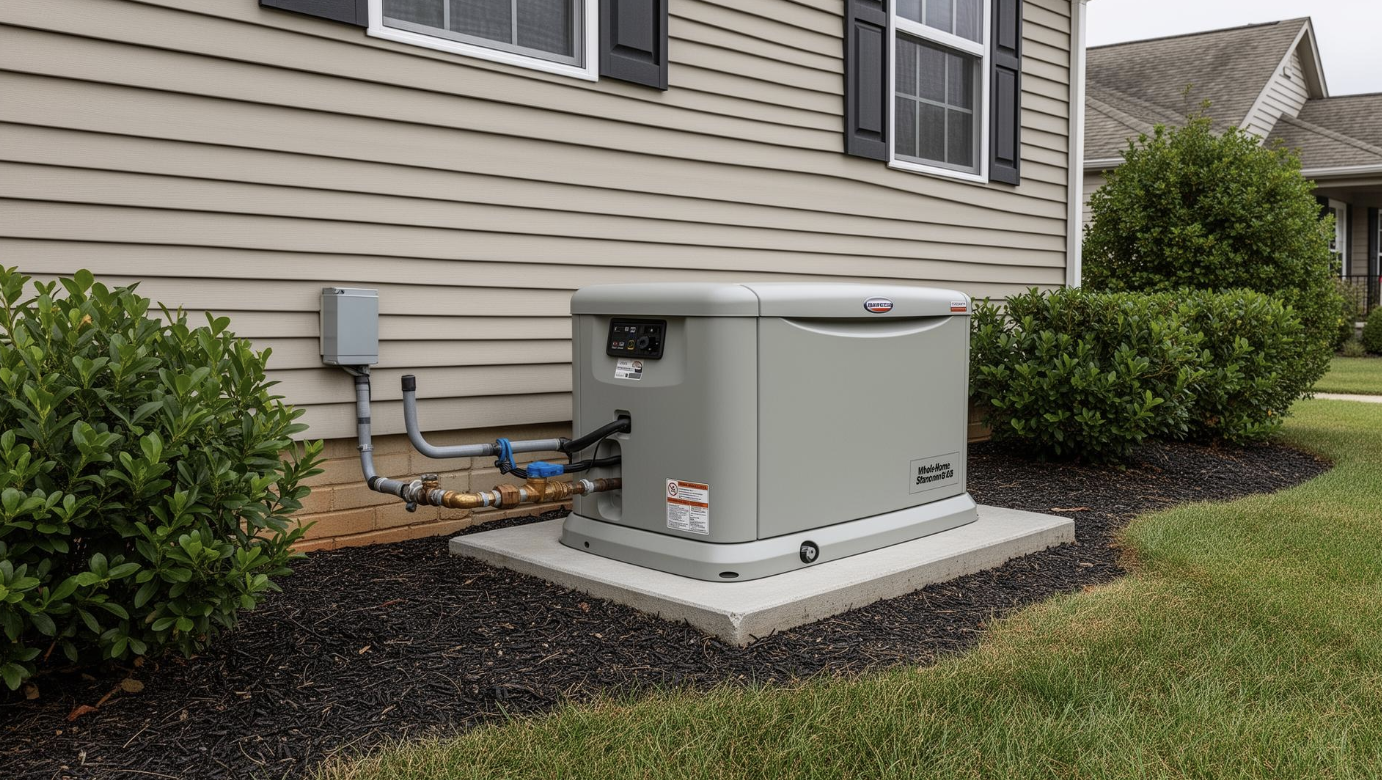
A whole-home standby generator: hands-off power for as long as the gas keeps flowing.
A whole-home standby generator: hands-off power for as long as the gas keeps flowing.
A gas standby generator — Generac, Kohler, Briggs & Stratton, Cummins — sits outside the house like an AC condenser. When the grid drops, an automatic transfer switch fires it up within seconds and runs your whole house until utility power returns.
The advantages are real:
Effectively unlimited runtime. Plumbed into a natural gas line, a standby unit will run for as long as the gas keeps flowing — days, weeks, indefinitely. Many also accept liquid propane and some can switch to gasoline if needed.
Whole-home capacity out of the box. A 22kW unit can run central AC, electric ranges, well pumps, and the rest of the house simultaneously. No load shedding, no triage.
Performs in cold weather without compromise. Engines don't care that it's 10 degrees outside.
Hands-off operation. Self-tests weekly, starts automatically, requires nothing from you during an outage.
The honest tradeoffs:
Significant upfront investment. A professionally installed whole-home standby system runs $8,000–$20,000+ depending on size, fuel routing, transfer switch, and electrical work. Add to that the gas line extension and concrete pad.
Ongoing fuel and maintenance costs. Annual service is non-negotiable — oil, filters, plug, battery. And when it runs, it burns fuel.
Noise and emissions. It's quieter than the old construction-site generators, but it's still a combustion engine outside your house.
Permits and clearance requirements. Setbacks from windows, property lines, and combustible structures are strict. We handle this, but it can affect placement.
So Which One Is Right for You?
There isn't a universal answer, but there are clear patterns we see across Denver Metro homes:
Larger homes with heavy electrical loads — central AC, electric vehicles, well pumps, hot tubs, multiple HVAC zones — usually do best with a gas standby unit, or a hybrid setup pairing a smaller battery with a generator.
Homes already moving toward electrification — heat pumps, induction ranges, EV chargers — pair naturally with solar plus storage. You're already going electric; the battery is the next logical step.
Homeowners on a tight budget who want real protection start with a quality 1,800W portable solar unit and a properly installed transfer switch or inlet. That combination, professionally wired, is the single best dollar-for-dollar resilience upgrade we install.
Mountain properties and homes with frequent extended outages lean toward gas for runtime, but a hybrid system is increasingly common.
Already Picked Your Unit? We'll Get It Installed.
Once you've decided what you want — a portable solar generator, a wall-mounted home battery, or a whole-home gas standby — the next step is the part most homeowners can't (and shouldn't) DIY: the actual electrical connection to your house.
That's where we come in. Lukas Electric handles the install side: transfer switches, inlet boxes, panel work, dedicated circuits, permitting, and inspection. Code-compliant, properly sized, and done right the first time.
If you're in the Denver Metro area and you've got a unit picked out (or already sitting in the garage), reach out.
